Signs you have outgrown your brand, and what a rebrand should change
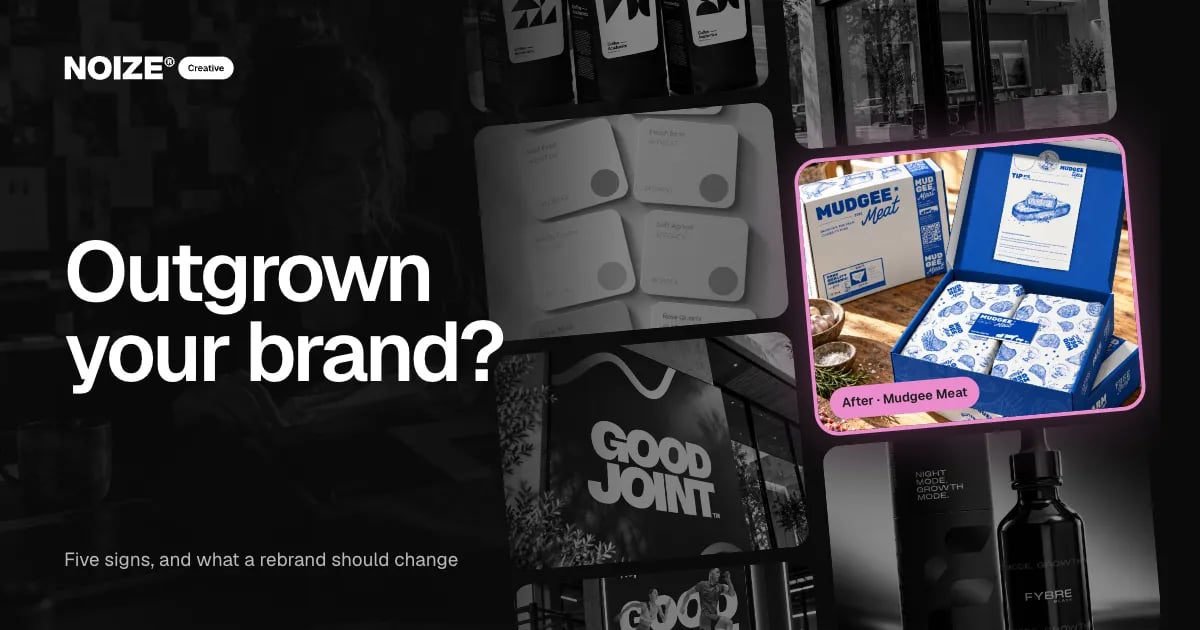
You hesitate before handing over a business card. You apologise for the website before sending the link. A new customer mentions they nearly called your competitor because the logos look alike. The business has grown, changed and improved. The brand has stayed exactly where it was.
Outgrowing a brand is a good problem. It means the business has moved on. But it is still a problem, because customers judge the business by what they see, and what they see describes a smaller, earlier version of you.
The short version
- A business has outgrown its brand when the brand no longer matches the ambition, the customer, the price point or the quality of the work.
- The common signs are hesitation, inconsistency, confusion with competitors, a shift in market and an internal reluctance to use the brand.
- A good rebrand keeps what customers already recognise, changes what holds the business back and starts with strategy, not design.
Five signs you have outgrown your brand
01You hesitate to use it
The clearest sign is personal. If the owner or team avoids handing over cards, sending the website or showing the proposal template, the brand is costing confidence every day.
02The business has moved upmarket
The services, customers and prices have grown, but the brand still looks like the business did in its first year. Premium clients see an entry-level look and assume an entry-level price.
03Customers confuse you with competitors
When people mix you up with others, the brand isn't distinctive enough to do its basic job: making the business easy to recognise and remember.
04Nothing matches
Years of additions have created a patchwork: old logo on the vans, newer one on the website, a third version on social. It has become impossible to say which is the real brand.
05The offer has changed
New services, new markets or a new structure mean the name, tagline or visual style no longer describe what the business does.
> I've co-founded businesses that outgrew their first brand within two years. The temptation was to keep patching it. Every time we finally rebranded properly, the next stage of growth came faster, because the business finally looked like the company we'd become.
What a rebrand should keep
- Recognised assets. If customers know your colour, mark or name, think carefully before discarding it. Recognition takes years to rebuild.
- Goodwill in the name. A name with reputation attached is valuable. Many rebrands refresh the identity and keep the name.
- What is genuinely true. The values and strengths that made the business succeed should carry through.
What it should change
The things holding the business back: an identity that looks like the category, a style that signals the wrong price point, inconsistent applications and messaging that no longer describes the offer.
What it should never touch without strategy
The position. A rebrand that changes the look without deciding who the brand is for and why it wins is likely to need redoing. Strategy comes first, design second.
“The rebranding execution exceeded our expectations.”
An illustrative example
Picture a family butcher that has grown into a multi-site retailer with online orders. The original logo was drawn for one shopfront. A rebrand keeps the family name and the heritage the community knows, sharpens the identity for packaging and signage, and builds a system that works on a delivery box as well as a shop awning. The business looks like what it has become, and the customers who knew it before still recognise it.
Rolling it out
A rebrand is only finished when it is everywhere. NOIZE Creative designs the brand, then Print rolls it out across signage, vehicles, uniforms and stationery, and Digital rebuilds the website around it. Planning the rollout together avoids the half-old, half-new period most rebrands suffer.
The cost of waiting
Many owners know the brand is holding them back but delay because a rebrand feels disruptive. The cost of waiting is easy to miss. Every proposal sent on an outdated template, every premium client who chose a competitor that looked more established, every hire who hesitated because the business looked smaller than it is, adds up.
A well-planned rebrand is less disruptive than most expect. The strategy and identity work happens in the background. The rollout is scheduled around a launch date. Customers see one change, made confidently, rather than months of half measures.
Refresh or rebrand?
Not every business needs a full rebrand. If the name and position still work and the issue is mainly a dated or inconsistent identity, a refresh can modernise the look while keeping recognition. If the business has changed direction, market or price point, or the name no longer fits, a full rebrand is usually the better investment. Strategy helps make that call before any design begins.
Where to start this week
Write down the three things you would never want to lose from the current brand and the three things that embarrass you most. The first list protects your recognition. The second is the brief. See creative.noize.com.au.
What customers notice after a rebrand
The most common reaction to a well-executed rebrand isn't "you changed your logo". It is "you've grown". Customers read a confident, consistent brand as a sign the business is doing well, which reassures existing clients and makes new ones more comfortable paying properly. Staff often notice it first, in how much easier it becomes to hand over a card or send a proposal.
Questions to ask before you start
Ask what you would never want to lose from the current brand. Ask what embarrasses you most. Ask how the business has changed since the brand was created. Ask who your best customers are now. Ask how many places the brand appears, so the rollout can be planned. The answers frame the rebrand brief.
Related reading
Common questions
How do I know if I need a rebrand or a refresh?
If the position and name still work and the problem is mainly visual inconsistency, a refresh may be enough. If the business has changed direction, market or price point, a full rebrand is usually right.
Will a rebrand confuse existing customers?
Not if it keeps recognised assets and is rolled out clearly. Many customers simply notice the business looks more established.
How long does a rebrand take?
The identity typically takes weeks. The rollout across every touchpoint is planned in stages.
Should we change our business name?
Only if it genuinely limits the business. A name with reputation attached is often worth keeping.
What does a rebrand include?
Strategy, identity, messaging, guidelines and a rollout plan across print, digital and environments.
How do we tell customers about a rebrand?
Launch it confidently and explain briefly what has changed and why. Marketing can turn the launch into a reason to reconnect with past customers.
What does a rebrand cost?
It depends on scope, from a focused identity refresh to a full rollout across signage, vehicles, packaging and digital. We scope the strategy, identity and rollout separately so you can plan the budget.
Your first strategy conversation is on us.
Have a chatThe brand for business.