Your website is your brand's hardest-working surface
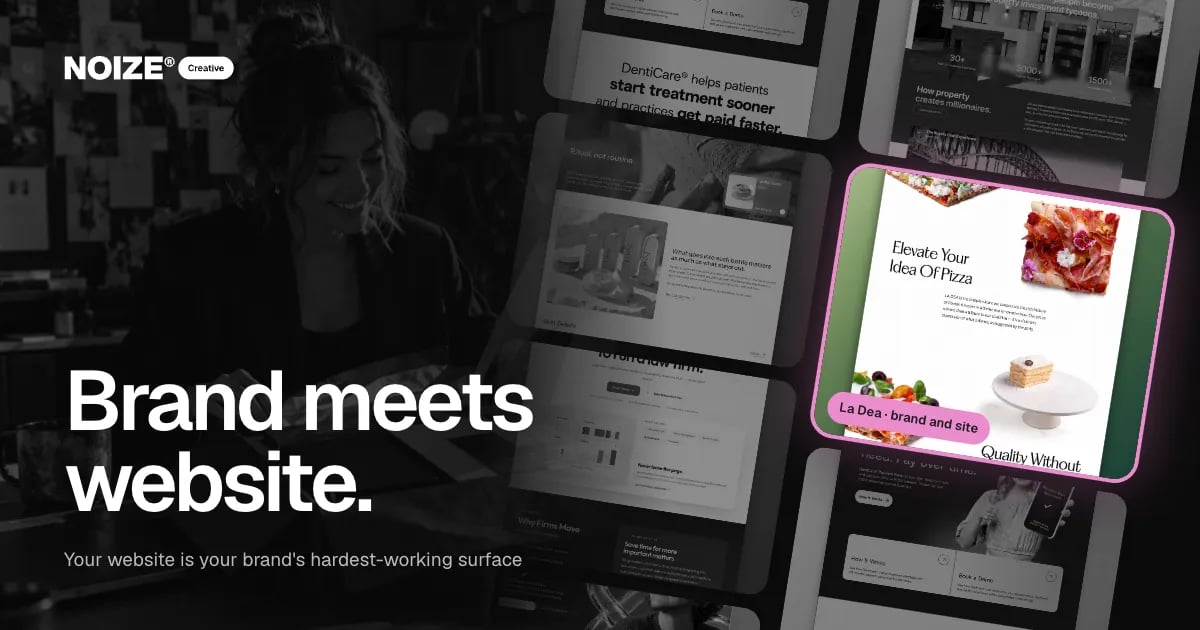
For most customers, the first real encounter with a brand happens on a phone. They search, tap a result and land on your website. In a few seconds they decide whether the business looks credible, relevant and worth contacting. The logo, the colours and the voice all matter, but they are experienced through the website.
That makes the website the brand's hardest-working surface. It is seen more often than any sign, card or ad. Yet in many businesses the brand is designed by one supplier and the website by another, and the two drift apart from the start.
The short version
- When brand and website are built separately, tone, type, colour and imagery get diluted, and the site ends up looking like a template with a logo on top.
- Designing them as one system keeps the brand intact and makes the site convert better, because visitors trust what looks consistent and considered.
- At NOIZE, Creative and Digital build from the same brand system, so the website is the brand rather than a container for it.
What gets lost between brand and website
01Tone of voice
The brand strategy defines how the business sounds. A developer working from a sitemap writes generic copy. The personality disappears.
02Typography
The brand typeface gets swapped for a web default because licensing or loading wasn't considered. The site no longer looks like the rest of the brand.
03Colour use
The palette is technically present, but used without the brand's rules. Accent colours appear everywhere, and the restraint that made the brand feel considered is gone.
04Imagery
The brand calls for real work and real people. The website fills gaps with stock photography.
05Hierarchy and space
Brand layouts are composed with care. Website templates crowd everything in. The premium feeling evaporates.
> I've built ecommerce businesses where the biggest conversion lift came from making the site feel like the brand, not from a new feature. Customers trusted it more, so they bought more. Trust is designed.
Why it affects results
A website that feels like the brand does more than look nice. It builds trust faster, which shortens the time a visitor needs before enquiring. It makes premium pricing believable. It reinforces recognition from ads and social, so returning visitors feel at home. And it makes every page clearer, because the brand's hierarchy guides attention to what matters.
How Creative and Digital work as one
At NOIZE, the website starts with the brand system: typography, colour rules, imagery style, tone of voice and layout principles. Digital builds those into reusable components, so every new page stays on brand without a designer checking each one. Creative writes or guides the copy so the voice survives. The result is a site that can grow without drifting.
Behind the design, Digital handles the platform: speed, SEO foundations, forms connected to the CRM and integrations with the tools the business uses. The brand gets the attention. The systems turn it into enquiries.
“A full new brand & website, and very happy with the results.”
An illustrative example
Picture a restaurant group with a strong identity on menus, signage and packaging, but a website built from a template. Online, it looks like any other venue. Rebuilt as part of the brand system, the site uses the same type, colour and photography as the venues, the booking flow is simple and the menus match what diners hold in their hands. Bookings rise because the site finally feels like the place people want to visit.
What a brand-led website includes
A brand-led website starts with a component library built from the brand system: headings, body text, buttons, cards, image treatments and layouts that follow the brand's rules. New pages are assembled from those components, so they stay on brand without a designer checking each one.
It also includes the content decisions. The voice is written into the copy. Real work and real people replace stock imagery. The hierarchy puts the customer's problem first and the business's story second. And the calls to action are consistent with the rest of the brand, so a visitor who arrived from an ad or a sign feels they are in the same place.
Keeping the site on brand over time
Websites drift as new pages are added, often by different people. Clear guidelines, reusable components and a single owner for brand approval keep the site consistent as it grows. At NOIZE, Creative and Digital share that responsibility, so the site that launches looks like the brand, and so does the site two years later.
Where to start this week
Open your website on a phone next to your business card and a photo of your signage. Do they look like the same business? Read the home page aloud. Does it sound like the brand, or like every competitor? The answers show how much of your brand is making it online. See creative.noize.com.au and digital.noize.com.au.
Speed is part of the brand
A beautiful website that takes too long to load on a phone damages the brand as much as a poor design. Visitors read slowness as carelessness. Brand-led design has to be built with performance in mind: optimised images, efficient code and type that loads quickly. Digital treats speed as a design requirement, not a technical afterthought.
Measuring whether it works
The point of a brand-led website is results, so measure them. Track enquiries, bookings or sales, the conversion rate from visit to action and how long visitors stay on key pages. Compare before and after a rebuild. When the brand and the site are working together, those numbers should improve.
Questions to ask before you start
Ask how many visitors arrive on a phone. Ask whether the website uses the brand typefaces and imagery. Ask who writes and approves new pages. Ask how fast key pages load. Ask what the site's main job is. The answers show how much of the brand is reaching customers online.
Related reading
- From screen to shopfront: designing a brand that survives the real world
- What brand consistency is worth to a small business
Common questions
Should brand and website be done by the same team?
It helps. When one team owns both, the brand stays intact and the site is built to support it.
Can you redesign our website around our existing brand?
Yes. Digital builds from the brand system Creative provides or refines.
Why does our website look like a template?
Usually because it was built from one, without the brand's typography, layout and imagery rules applied properly.
Does a branded website really convert better?
A consistent, considered site builds trust faster, which typically improves enquiries and sales.
Who writes the website copy?
Creative writes or guides it, so the tone of voice matches the rest of the brand.
How do we keep the website on brand as we add pages?
Build it from reusable brand components, document the rules and have one owner approve new pages.
Should the website use the same photography as our printed material?
Ideally, yes. Consistent, real photography across print and digital strengthens recognition and trust.
Your first strategy conversation is on us.
Have a chatThe brand for business.